
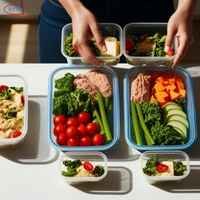
Miljövänliga alternativ till avhämtningsbehållare
Du har precis ätit klart en utsökt hämtmat. Nu står du i köket, håller i den tomma behållaren och leker den där välbekanta gissningsleken: skräp, återvinning eller… kompost? Vi har alla varit där och försökt förstå de små symbolerna och förvirrande etiketterna på hämtmatsbehållare, och känner lite skuld oavsett vilken behållare vi väljer.
Detta dagliga pussel är inte bara din frustration; det är en enorm utmaning för våra återvinningssystem. I praktiken hamnar många behållare som verkar återvinningsbara på soptippen helt enkelt på grund av matrester eller material som lokala anläggningar inte kan bearbeta. Men du behöver inte vara expert för att få det rätt. Den här guiden ger enkla, tydliga svar för alla vanliga behållare du stöter på.
Du lär dig hur man identifierar material, de verkliga reglerna för kassering och vad man ska leta efter i verkligt miljövänliga livsmedelsförpackningar, vilket gör att du slipper gissningsleken för gott.
Styrofoam-dilemmaet: Varför det är dåliga nyheter för dig och planeten
Den där vita, lätta behållaren som håller din soppa varm eller dina rester skyddade är förmodligen frigolit. Även om det är ett bra isolerande material är det ett av de mest problematiska engångsartiklarna för matservering som finns när man tänker på vad som händer efter att måltiden är klar.
Låt oss först reda ut den största myten: frigolit är inte återvinningsbart i din soptunna. Dess officiella namn är expanderad polystyren (EPS), och eftersom det består av 95 % luft gör dess lätta och smuliga struktur det otroligt svårt för återvinningsanläggningar att hantera det. För nästan alla betyder det att den enda platsen för det är soptunnan.
Funderar du på att värma upp maten direkt i behållaren? Det är bäst att flytta den till en annan tallrik. När frigolit värms upp kan det frigöra en kemikalie som kallas styren, som kan sippra in i maten. Även om en enstaka gång inte är en anledning till panik, är det säkraste valet att helt enkelt undvika att mikrovågsugna det. Att besvara frågan "är frigolitbehållare mikrovågssäkra?" är enkelt: om du är osäker, gör det inte.
Problemen slutar inte där. På en soptipp tar det uppskattningsvis 500 år för frigolit att brytas ner. Med tiden smular det sönder till små plastpärlor som kan förorena mark och vatten i århundraden. På grund av dessa hälso- och miljöproblem övergår många städer och företag till bättre frigolitalternativ för mat. Men hur är det med de genomskinliga plastbehållare som har blivit så vanliga?
Den där genomskinliga salladsbehållaren: En återvinningsbar All-Star (med en hake)
After dealing with the headaches of Styrofoam, it’s a relief to talk about one of the good guys in food service disposables recycling: that clear, rigid plastic container your salad or fruit often comes in. Flip it over, and you’ll almost always find a #1 in the little chasing-arrows symbol. This indicates it’s made from PET plastic, the same material as water bottles, and it happens to be one of the most valuable and easily recycled plastics you’ll encounter.
But here’s the important catch: #1 plastic is not built for heat. You should never put these containers in the microwave. The relatively low melting point means the plastic can warp or even melt, potentially leaching chemicals into your meal. While there are different types of clamshell containers, the rule for these clear ones is simple: always move the food to a microwave-safe plate before reheating.
Getting this container ready for the bin is easy—a quick rinse to remove leftover dressing or food bits is all that’s needed. In the plastic vs paper food containers debate, a clean #1 container is a strong contender for the recycling bin. This simple process, however, relies on recycling facility scanners being able to see the plastic in the first place. This brings us to a tricky cousin of the clear container: the black plastic tray.
Decoding the Triangle: What the Number on Your Container Really Means
You might be wondering, if that black plastic tray has a recycling symbol on the bottom, why does it end up in the trash? It’s a fair question that gets to the heart of the biggest myth in recycling. For decades, we’ve been trained to see the “chasing arrows” and think “recyclable,” but that’s not the whole story.
That symbol is actually a Resin Identification Code (RIC). Think of it less as a green light for your recycling bin and more like an ID tag. It simply tells a recycling facility what type of plastic the container is made from. Whether that facility has the right machinery and, just as importantly, a buyer for that specific plastic is a completely different issue.
Understanding these numbers is a helpful part of navigating sustainable food service packaging. In your take-out travels, you’ll mostly encounter three types:
- #1 (PET): The star player. Found in clear salad containers and water bottles.
- #2 (HDPE): The sturdy type. Used for milk jugs and some opaque tubs.
- #5 (PP): The heat-resistant one. Common for yogurt cups and hot soup containers.
So, what’s the bottom line? While knowing the number is useful, the true authority on food service disposables recycling is your local program. Most programs readily accept #1 and #2 plastics, while #5 can be hit-or-miss. A quick check on your town’s website is always the best move. Of course, even if you have the right type of container, there’s another common hurdle that can send a perfectly good item straight to the landfill.
The Greasy Pizza Box Problem: Why Food Contamination Ruins Recycling
It’s one of the most common questions in food service disposables recycling: can I recycle this pizza box? The answer is “it depends,” and it all comes down to one simple enemy: grease. While paper and cardboard are some of the easiest materials to recycle, they have a major weakness. Once oil or food grease soaks into the paper fibers, it’s impossible to separate them.
Think of it like trying to make a smoothie with a cup of olive oil. The oil would contaminate everything, creating a greasy, unusable mess. The same thing happens at the recycling facility. During the pulping process, where paper is mixed with water to create a slurry, the oil separates from the fibers and ruins the entire batch. In fact, just a few greasy containers can cause a whole bale of clean, recyclable paper to be sent to the landfill. This is a key factor when considering plastic vs paper food containers; each has unique recycling challenges.
So, what can you do? The fix is simple: tear it. If the top of your pizza box is clean and grease-free, tear it off and put it in the recycling bin. The greasy bottom part, however, has to go in the trash. This little step makes a huge difference. But what about those containers that claim they can handle food waste? That brings us to another confusing topic: compostable packaging.
Compostable vs. Biodegradable: What’s the Real Difference?
Walking through the world of eco-friendly food packaging options, you’ll see the words “biodegradable” and “compostable” used almost everywhere. While they sound similar, they mean very different things. Think of “biodegradable” like an apple core tossed in the woods: nature will eventually break it down on its own schedule, but that could take many years. The term simply means a material can be broken down by living organisms, without any guarantee on how long it will take or what it will leave behind.
“Compostable,” on the other hand, is a much more specific promise. An item that is certified compostable is designed to break down completely into nutrient-rich soil within a specific timeframe, but only under the right conditions. Here’s the catch: it needs help. It won’t simply break down on its own in a landfill or even in your backyard compost bin.
That required “help” comes from a place called an industrial composting facility. These are large-scale operations that create the perfect, high-heat environment (often over 130°F) needed to break down tougher materials. This is especially true for popular compostable plastics like PLA, a clear but brittle plastic made from cornstarch. Knowing what are compostable food containers made of is key; PLA requires that intense heat to decompose properly.
So, what’s the bottom line for that “green” container in your hand? Unless your city has a specific collection program that sends food packaging to an industrial composting facility, that compostable fork or bowl usually has to go in the trash. In a landfill, it’s robbed of the oxygen it needs to decompose, failing to deliver on its environmental promise. This is a central challenge in any guide to sustainable food service packaging, but there are materials that offer a better solution.
Meet the Best Eco-Friendly Option: Sugarcane (Bagasse) Containers
After learning about the challenges of compostable plastics, you might be wondering if a truly better choice exists. Chances are, you’ve already held it in your hands. Think about those sturdy, off-white clamshells or bowls you get from food trucks or health-conscious cafes. They feel fibrous, almost like a high-end paper plate, but are much stronger. This material is one of the best eco-friendly food packaging options available: sugarcane fiber, also known as bagasse.
The real magic of bagasse is where it comes from. It’s the pulpy fiber left over after juice is extracted from sugarcane stalks—a waste product that gets an impressive second life. For you, this translates to a container that’s surprisingly tough. It holds up to greasy or wet foods without getting soggy, is perfectly safe to microwave, and works just as well for a hot curry as it does for a cold salad, making it one of the top styrofoam alternatives for food.
Like other certified compostable items, these sugarcane bagasse containers need an industrial composting facility to break down properly into soil. When that system is available, they complete a truly circular journey. It’s an impressive feat for a humble take-out box. However, to achieve that celebrated grease- and water-resistance, many fiber-based containers are treated with chemicals. That raises an important question about what else might be hiding in our seemingly “green” bowl.
The Hidden Chemical in Your “Green” Bowl: What are PFAS?
That impressive sturdiness we just talked about—the ability of a fiber bowl to hold a hot soup without turning to mush—doesn’t always happen naturally. To get that powerful grease and water resistance, many of these eco-friendly food packaging options are treated with a specific class of chemicals. For a long time, the industry standard has been a group of substances known as PFAS.
So, what exactly are these chemicals? You may have heard of them by their unfortunate, but accurate, nickname: “forever chemicals.” Scientists gave them this name because their molecular structure is so strong that they don’t break down in the environment or in our bodies. This incredible durability is precisely what makes them so effective at lining a container to prevent leaks, but it’s also the very thing that makes them a concern.
The problem with “forever” is that it means these chemicals can accumulate over time. When a container treated with PFAS ends up in a landfill or even a compost pile, the chemicals can eventually leach into soil and water. Various studies have linked long-term exposure to certain PFAS with a range of health issues, which has prompted a major rethinking of their use in materials that touch our food.
Thankfully, the story doesn’t end there. As awareness has grown, so has the demand for safer alternatives. In response to new regulations and consumer pressure, many companies are now actively moving away from these chemicals. This has led to the development of new, PFAS-free coatings that still get the job done. Many manufacturers now proudly label their products as “PFAS-free,” giving you a clearer path to making a better choice.
How to Keep Your Takeout Hotter for Longer
There’s nothing more deflating than getting home, ready to eat, only to discover your once-hot meal is now disappointingly lukewarm. The trip from the restaurant to your table is a critical window for heat loss, but you have more control than you think. Learning how to keep takeout food warm is easy, and it starts with the right tool. The single most effective thing you can do is bring an insulated bag with you for pickup—the kind you might use for groceries. It’s a game-changer for trapping heat.
Beyond the bag, a simple, no-cost trick is to keep all the take out food containers huddled together on the ride home. Think of it like a group of people staying warm in the cold; by keeping the boxes and cartons packed tightly, they share their collective heat, and each one stays warmer for longer. A single container sitting alone on a car seat will lose its warmth much faster than three or four snuggled up together.
Even with the best preparation, some dishes might need a quick boost. If your meal arrives home a little cooler than you’d like, resist the urge to zap it in the microwave. For a much better result, transfer the food to an oven-safe dish and reheat it in your conventional oven or toaster oven for a few minutes. This warms everything through gently and evenly, avoiding those frustrating hot and cold spots.
But keeping food hot is only half the battle. The other great challenge is keeping it from getting soggy.
The Secret to Crispy Fries and Non-Soggy Buns
We’ve all experienced it: you get home with what should be perfectly crispy fries, but by the time you open the box, they’re limp and sad. The culprit isn’t the car ride; it’s steam. Hot food naturally releases moisture, and when it’s sealed in an airtight container, that steam has nowhere to go. It condenses back into water, dripping all over your food and turning anything crispy into a soggy disappointment. The key to how to prevent soggy takeout food is simply to let that steam escape.
Det är därför rätt behållare för avhämtning är så viktiga för vissa måltider. En enkel papperspåse är ofta pommes frites bästa vän eftersom materialet andas. När du ser olika typer av musslor, lägg märke till att kartongen som används till hamburgare ofta har små ventiler eller hål. Det är inga misstag; de är utformade för att släppa ut ånga och skydda brödet från att bli mosigt. En helt förseglad plastbehållare, å andra sidan, är en ångfälla – perfekt för soppa, men hemsk för allt som är menat att vara krispigt.
Utöver behållaren har du ett annat kraftfullt verktyg: att be om såser och dressingar vid sidan av. Denna enkla förfrågan ger dig fullständig kontroll, vilket säkerställer att din sallad håller sig krispig och att din fish and chips inte blir blöt innan du är redo att äta. Att veta vilken behållare som fungerar bäst för vilken maträtt är till stor hjälp, vilket är anledningen till att det kan vara så användbart att ha en snabbguide.
Din fusklapp för avhämtningsbehållare: En snabbguide för ditt kök
Du står inte längre i köket och undrar om behållaren är skräp eller återvinning. Nu har du möjlighet att titta på vilken hämtmatsbehållare som helst och veta exakt vad du ska göra med den på ett säkert och ansvarsfullt sätt. För att göra det ännu enklare har vi en snabb guide till hämtmatsbehållare som du kan hänvisa till mentalt varje gång.
Fusklappen för snabb sortering
- Frigolit:
- Mikrovågsugn? Inga.
- Förfogande: Skräp.
- Genomskinlig plast (som för sallader, #1 PET):
- Mikrovågsugn? Nej, aldrig.
- Förfogande: Återvinn (rengör och töm).
- Grumlig/färgad plast (som för soppa, #5 PP):
- Mikrovågsugn? Vanligtvis, men kontrollera om det finns en etikett med texten "mikrovågssäker". Gör inte det om du är osäker.
- Förfogande: Skräp (de flesta sorteringsmaskiner kan inte se svart plast).
- Aluminiumburkar:
- Mikrovågsugn? Ja (förvånansvärt nog, i de flesta moderna mikrovågsugnar – se bara till att den inte vidrör sidorna).
- Förfogande: Återvinn (skölj det snabbt).
- Pappers-/fiber-/sockerrörsskålar:
- Mikrovågsugn? Ja.
- Förfogande: Kompost (om ditt område har industriell kompostering) eller avfall.
Du har lyckats avkoda den förvirrande världen av plast- kontra pappersförpackningar för mat. Nästa gång du äter klart en måltid kommer du inte att se förpackningen som ett pussel, utan som ett enkelt val. Varje gång du gör rätt beslut bygger du upp en säker, ny vana. Du kan nu njuta av din mat i vetskapen om att städningen kommer att vara enkel, smart och stressfri.

 English
  Spanish
  German
  French
  Dutch
Dutch  Portuguese
  Italian
  Chinese
  Japanese
  Bengali
  Swedish
  Russian